

Proceso

How Leaders Are Achieving Retail Excellence: Key Insights from our conversation with Aditya Birla Fashion  

Retail Excellence

For years, the retail industry has relied on checklists to keep store operations streamlined. But as the scale and pace of retail have expanded, leading retailers are facing challenges like execution gaps hidden in plain sight. 

In our recent webinar “From Checklists to an Ops Brain”Pavan Katgeri, Lead of Safety at Aditya Birla Fashion, revealed how they are closing the execution gap with an intelligent operational layer that constantly senses, interprets, and prioritizes store-level actions.   

Here, we will discuss insights ABF has gained into its approach to transforming retail execution from a manual routine to a proactive, data-driven rhythm. 

Why Retail Execution Is Evolving Beyond Checklists?

For years, checklists were the backbone of retail. Simple to use and easy to track if the basic tasks are completed, such as opening routines, safety checks, or promotional deployments.  

Since the store counts are increasing, and formats are diversifying, the gap between completed tasks and actual execution quality widens.  

Pavan’s experience shows this clearly,  

“I used to carry a lot of printed checklists… write down observations… take pictures… and once I came back, I used to sit in the HO and put everything into Excel and then email 35–40 stores individually.” ​

This shows that retail execution has outgrown checklists because modern retail needs intelligence and validation. 

Retail Execution Has Evolved Into Orchestration 

The real problem isn’t people, but it’s that the retail environment now demands real-time decisions, instant visibility, and intelligent coordination across hundreds or thousands of stores. What once worked through periodic reviews and manual follow-ups now requires structured, connected intelligence that operates continuously in the background. 

This is why the idea of Ops Brain naturally emerged as an operational layer. A layer that brings agentic automation into everyday workflows, introducing multiple tiers of intelligence that support decision-making, align execution, and create visibility across the enterprise. Ops brain brings four layers of intelligence 

  • SOP intelligence– the rulebook of what needs to happen 
  • Store Context– What is unique about each store, and who needs to do what? 
  • Real-time visibility– Instant awareness of what’s happening across the network 
  • Intelligent tasking– The system assigns the right work to the right store at the right time based on data. 
 

Together, these layers shift operations from manual execution to intelligent orchestration. Retail is evolving towards a synchronised, intelligence-driven operating system that fills the gap between knowledge and action. 

Disconnect between store and HQ

“The reports were getting delayed… we were not able to track those reports… the number of stores was increasing every year… and manual dependency was really getting difficult for us to scale.”

Pavan Katgeri


This means that ABF knew what was wrong, but execution slowed down due to process bottlenecks, poor visibility, and the inability to scale manual oversight. 

This might happen when retail execution is dependent on employees remembering tasks, chasing approvals, and compiling reports. This proves the fact that consistency breaks, especially at scale. 

Closing the knowledge execution gap is the key to sustainable retail excellence, and that only system-level intelligence, not additional manual effort, can reliably achieve it in today’s high velocity retail environment. 

How is ABF using Proceso to achieve Retail Excellence? 

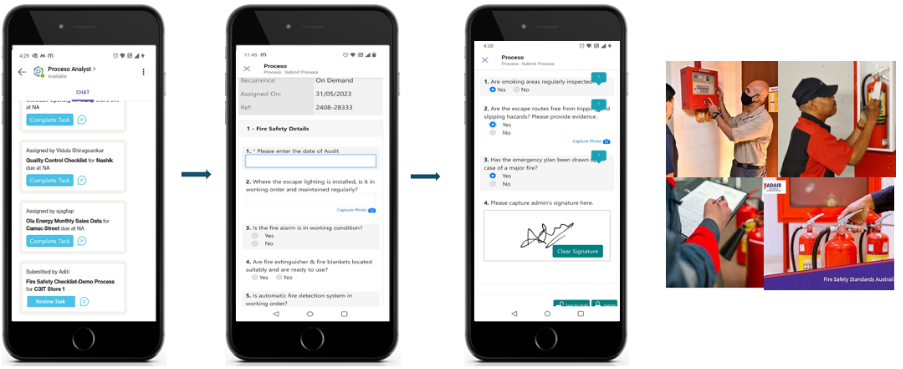
Proceso has changed the dynamic by embedding operational intelligence directly into the store workflows. Instead of audits living in inboxes, digital checklists moved onto mobile devices, enabling the team to capture observations, attach evidence, and trigger reports instantly on the floor.  

The true shift, however, was cognitive. By standardising SOPs, automating task assignment, and layering analytics on top of store activity, Proceso decreased dependency on human memory and manual coordination.  

For ABF, this meant three tangible outcomes: 

  • Execution became faster since reporting was instantaneous 
  • Oversight became sharper because dashboards surfaced risk and performance patterns automatically 
  • Scalability improved because the same framework can support thousands of stores, multiple formants and expand SOP libraries.   
Proceso

What is a Perfect Store in Pavan’s words?

As stated by the leader from ABF

Retail excellence at scale requires clarity of standards, visibility of execution, and consistency of follow-through… and when all these three things align, performance becomes sustainable.

This can also be aligned with the definition of a perfect store.  

It is the operational manifestation of retail excellence. It is where standards are not just documented but lived daily, where data replaces guesswork, and where customers experience the brand exactly as it was designed.  

Large retailers are systematically building perfect stores that not just improve compliance. They create more consistent customer satisfaction and stronger brand trust 

Conclusion

ABF has recognised a critical truth. To scale across hundreds or thousands of stores and maintain consistency simultaneously is not easy with manual processes or checklists. The complexity of modern retail needs an operational layer that can think, prioritize, and execute alongside the workforce. 

The future of retail execution can be optimized by organizations that treat operations as a data-driven system rather than a collection of manual routines. Leaders need to act and unify store operations rather than just focusing on improving compliance and consistency. They will build faster, more resilient, and truly scalable retail networks.  

How Leaders Are Achieving Retail Excellence: Key Insights from our conversation with Aditya Birla Fashion  

Retail Excellence

For years, the retail industry has relied on checklists to keep store operations streamlined. But as the scale and pace of retail have expanded, leading retailers are facing challenges like execution gaps hidden in plain sight. 

In our recent webinar “From Checklists to an Ops Brain”Pavan Katgeri, Lead of Safety at Aditya Birla Fashion, revealed how they are closing the execution gap with an intelligent operational layer that constantly senses, interprets, and prioritizes store-level actions.   

Here, we will discuss insights ABF has gained into its approach to transforming retail execution from a manual routine to a proactive, data-driven rhythm. 

Why Retail Execution Is Evolving Beyond Checklists?

For years, checklists were the backbone of retail. Simple to use and easy to track if the basic tasks are completed, such as opening routines, safety checks, or promotional deployments.  

Since the store counts are increasing, and formats are diversifying, the gap between completed tasks and actual execution quality widens.  

Pavan’s experience shows this clearly,  

“I used to carry a lot of printed checklists… write down observations… take pictures… and once I came back, I used to sit in the HO and put everything into Excel and then email 35–40 stores individually.” ​

This shows that retail execution has outgrown checklists because modern retail needs intelligence and validation. 

Retail Execution Has Evolved Into Orchestration 

The real problem isn’t people, but it’s that the retail environment now demands real-time decisions, instant visibility, and intelligent coordination across hundreds or thousands of stores. What once worked through periodic reviews and manual follow-ups now requires structured, connected intelligence that operates continuously in the background. 

This is why the idea of Ops Brain naturally emerged as an operational layer. A layer that brings agentic automation into everyday workflows, introducing multiple tiers of intelligence that support decision-making, align execution, and create visibility across the enterprise. Ops brain brings four layers of intelligence 

  • SOP intelligence– the rulebook of what needs to happen 
  • Store Context– What is unique about each store, and who needs to do what? 
  • Real-time visibility– Instant awareness of what’s happening across the network 
  • Intelligent tasking– The system assigns the right work to the right store at the right time based on data. 
 

Together, these layers shift operations from manual execution to intelligent orchestration. Retail is evolving towards a synchronised, intelligence-driven operating system that fills the gap between knowledge and action. 

Disconnect between store and HQ

“The reports were getting delayed… we were not able to track those reports… the number of stores was increasing every year… and manual dependency was really getting difficult for us to scale.”

Pavan Katgeri


This means that ABF knew what was wrong, but execution slowed down due to process bottlenecks, poor visibility, and the inability to scale manual oversight. 

This might happen when retail execution is dependent on employees remembering tasks, chasing approvals, and compiling reports. This proves the fact that consistency breaks, especially at scale. 

Closing the knowledge execution gap is the key to sustainable retail excellence, and that only system-level intelligence, not additional manual effort, can reliably achieve it in today’s high velocity retail environment. 

How is ABF using Proceso to achieve Retail Excellence? 

Proceso has changed the dynamic by embedding operational intelligence directly into the store workflows. Instead of audits living in inboxes, digital checklists moved onto mobile devices, enabling the team to capture observations, attach evidence, and trigger reports instantly on the floor.  

The true shift, however, was cognitive. By standardising SOPs, automating task assignment, and layering analytics on top of store activity, Proceso decreased dependency on human memory and manual coordination.  

For ABF, this meant three tangible outcomes: 

  • Execution became faster since reporting was instantaneous 
  • Oversight became sharper because dashboards surfaced risk and performance patterns automatically 
  • Scalability improved because the same framework can support thousands of stores, multiple formants and expand SOP libraries.   
Proceso

What is a Perfect Store in Pavan’s words?

As stated by the leader from ABF

Retail excellence at scale requires clarity of standards, visibility of execution, and consistency of follow-through… and when all these three things align, performance becomes sustainable.

This can also be aligned with the definition of a perfect store.  

It is the operational manifestation of retail excellence. It is where standards are not just documented but lived daily, where data replaces guesswork, and where customers experience the brand exactly as it was designed.  

Large retailers are systematically building perfect stores that not just improve compliance. They create more consistent customer satisfaction and stronger brand trust 

Conclusion

ABF has recognised a critical truth. To scale across hundreds or thousands of stores and maintain consistency simultaneously is not easy with manual processes or checklists. The complexity of modern retail needs an operational layer that can think, prioritize, and execute alongside the workforce. 

The future of retail execution can be optimized by organizations that treat operations as a data-driven system rather than a collection of manual routines. Leaders need to act and unify store operations rather than just focusing on improving compliance and consistency. They will build faster, more resilient, and truly scalable retail networks.  

Share the Post: